





smart #2 EV concept and #6 EHD hybrid hatchback unveiled at brand night ahead of Beijing Auto Show · TechNode
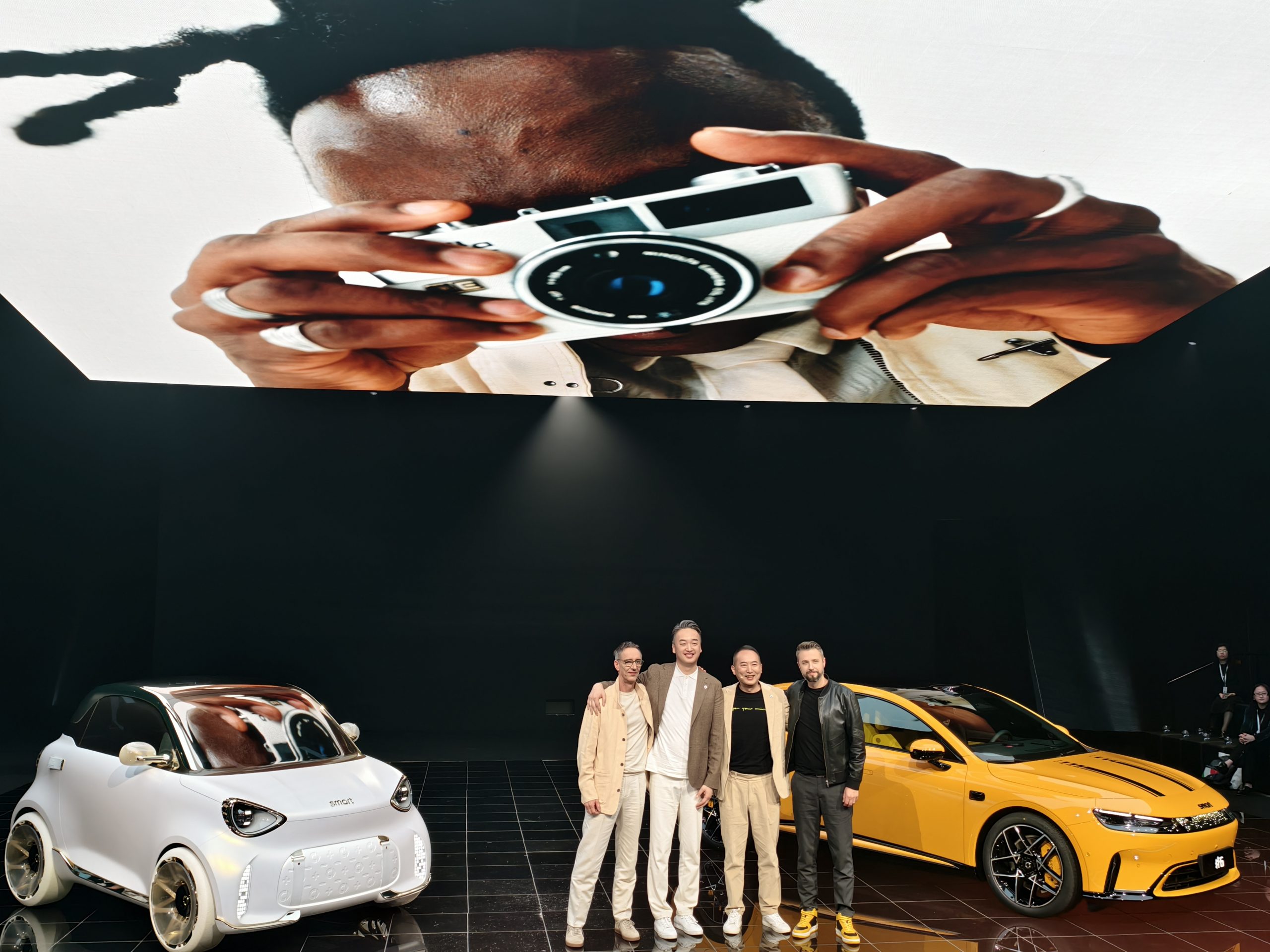
On Wednesday, at the smart Global Brand Night event held in Beijing, the China-Germany joint venture electric vehicle brand smart unveiled the new smart #2 concept car and the smart #6 EHD under the theme Change of Perspectives.
As the brand continues to expand its electric vehicle lineup and reposition itself in the premium EV space, smart is drawing renewed attention with its latest concepts. The newly revealed models also signal a return to the brand’s urban mobility roots while exploring new segments.

smart #2 Concept: a compact electric city car
The smart #2 concept car was designed by Mercedes-Benz’s design team and is built on the all-new ECA architecture. It pays homage to the brand’s roots while replicating the classic design of the first-generation smart fortwo. It features a matte white and gold color scheme, with clean, flowing body lines and gold chrome accents used as subtle detailing.
The car is about 2.79 meters long and retains smart’s signature wheel-at-each-corner layout, with short overhangs and a long wheelbase to maximize interior space. Its turning radius is 6.95 meters, which makes it highly maneuverable and well suited for city driving and parking.
This is a fully electric vehicle with a CLTC range of nearly 400 kilometers. DC fast charging is supported, and the battery can be recharged from 10% to 80% in about 20 minutes. It also features Vehicle-to-Load (V2L) functionality that allows it to power external devices.

smart #6 EHD: luxury hybrid hatchback with extended range
The smart #6 EHD is smart’s first hatchback model in the hybrid segment. It combines Mercedes-Benz’s platform experience with Geely’s new energy hybrid system development. The exterior design follows the Sensual & Sharp theme and is influenced by shark morphology.
The vehicle measures 4906 × 1922 × 1508 mm, with a wheelbase of 2926 mm. Reported space utilization is 86%. The interior uses circular geometric elements as a primary design motif. It is equipped with a dual-screen layout for the center display and front passenger display. Multiple interface themes are available. An audio system and multi-color ambient lighting are included.
The vehicle uses the EHD hybrid system with a combined output of 320 kW. The CLTC combined driving range is up to 1,810 km. Fuel consumption in charge-depleting mode is 3.9 L/100 km, and the engine is compatible with 92-octane petrol.

Interview with smart executives
In a post-event media session, smart Global CEO Tong Xiangbei and Head of Design at smart Kai Sieber discussed the company’s product strategy, global alignment, and positioning. Smart is continuing to develop a unified global product portfolio built on shared platforms, according to the brand.
Tong said that smart operates as a global brand, with products defined under global standards from the early development stage. China often serves as the initial launch market before global rollout.
Smart does not create fully separate product lines for different regions, but instead applies engineering-level adaptations within a unified architecture to meet regulatory and usage differences across markets such as China and Europe, Tong added.
Kai said the current platform provides flexibility for different body styles and future derivatives, although any new product decisions will depend on market demand, brand positioning, and business feasibility.

On competition in China, both executives stated that smart does not compete primarily on price. Tong referred to engineering integrity and core automotive substance, while Kai highlighted consistent design language and coherent driving characteristics as key differentiators.
Regarding smart #2, Tong described it as an urban-focused vehicle centered on space efficiency, enabled by an EV platform and wheel-at-corner layout. He stressed it is a fully functional car rather than a simplified product.
Small-car usage varies across Europe and China, but the target audience is broad, including urban commuters, second-car households, and users such as retirees seeking compact mobility, according to Tong.

Kai added from a design perspective that smart #2 continues the brand’s reinterpretation of proportion and spatial efficiency. The electric platform architecture allows more usable cabin space, ensuring that the vehicle maintains both functional completeness and a coherent automotive identity, rather than being positioned as a basic micro-mobility tool.